
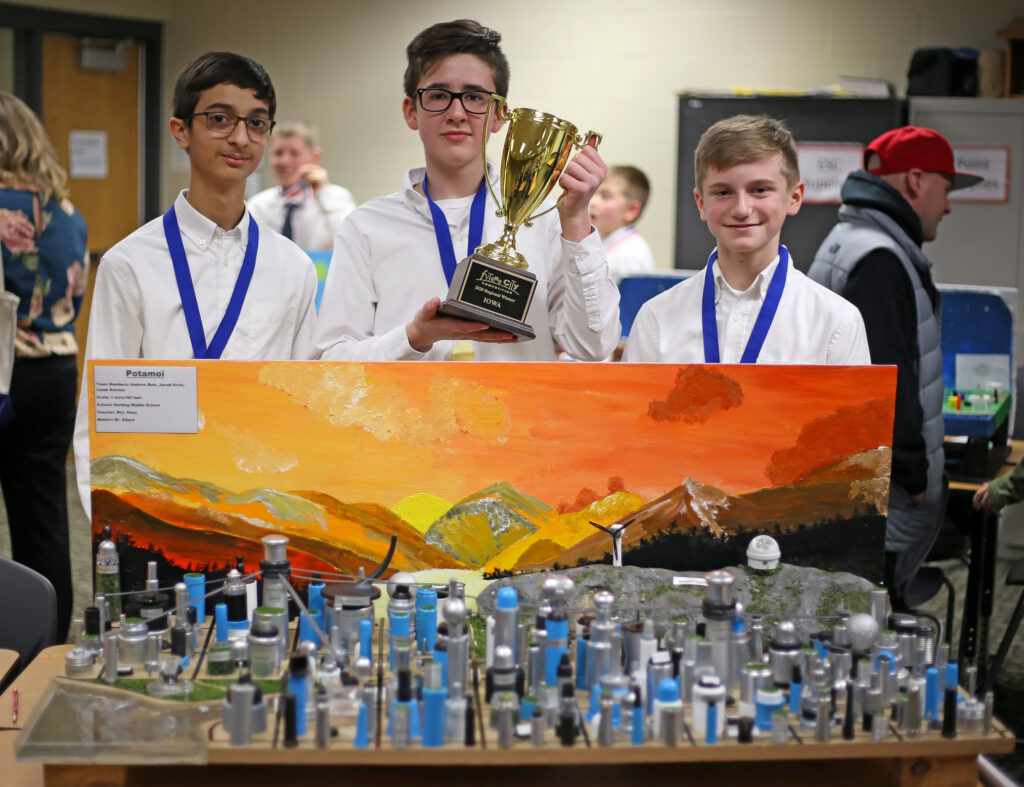
After a fulfilling season that saw some of Iowa’s most promising young minds take the national stage in Washington, D.C., the Future City Iowa competition is officially returning to the Iowa State University College of Engineering for the 2026-2027 season. This year, the challenge hits home with the critical, timely theme of “A Fire-Resilient Future.”
Middle school students in 6th, 7th, and 8th grade are tasked with imagining, researching, and designing a city that can prevent, protect against, and recover from urban wildfires. It is a challenge that perfectly blends engineering exactness with imaginative urban planning, and Iowa’s organizers are looking for the next generation of leaders to step up to the plate.
From Cedar Rapids to the Nation’s Capital
The momentum for the 2027 season follows a banner year for local schools. This past February, educator Amy Engleman of Taft Middle School led her regional-winning team of five eighth-graders to the Future City International Finals in Washington, D.C. Competing under the 2026 “Farm to Table” theme, the Taft team placed in the top 10 globally (officially ranking #9 out of 45 teams competing), a major achievement for the Iowa region.
The five-day national competition is a grueling yet thrilling marathon. Students undergo intense presentations, model inspections, and high-pressure Q&A sessions with industry professionals. For Future City Iowa Regional Coordinator Ashley Turner, witnessing the Taft team compete against schools from across the globe was proof of the power of hands-on, project-based learning.
“It was truly incredible to watch our youth create so much from so little,” says Turner. “Seeing them transform recycled materials and raw data into elaborate urban solutions reminds you that these students aren’t just learning about the future; they’re building it in real time.”
The 2027 Challenge: A Fire-Resilient Future
As urban environments expand into the wildland-urban interface, the risk of fire has become a global priority. The 2027 theme, “A Fire-Resilient Future,” asks students to look beyond the fire truck. They must evaluate innovative building materials, smart city layouts that facilitate evacuation, and advanced technologies, such as AI-driven early-detection systems, to safeguard their citizens.
This isn’t just a science project; it’s a mission. Students must consider the social and economic impacts of their designs. For example, how does a city maintain its economy after a disaster, and how will we ensure that the most vulnerable populations are protected during an emergency? By tackling these questions and more, students develop a deep sense of civic responsibility alongside their technical skills.
More Than Just a Science Fair
Future City is a cross-curricular powerhouse that utilizes the Engineering Design Process (EDP). Unlike traditional fairs, where a student might work in isolation, Future City calls for a multifaceted team effort. The competition consists of five primary deliverables:
The City Essay: A 1,500-word technical description of their city’s unique attributes and its solution to the annual challenge.
The City Model: A physical scale model built almost entirely from recycled and “found” materials (with a total budget of only $100).
Project Plan: Students must use project management tools to keep their team on track and learn the “soft skills” required in the contemporary workforce.
The Presentation: A live seven-minute presentation delivered to a panel of judges.
The Q&A: A deep-dive session where judges test the students’ knowledge of their own designs.
“The beauty of this program is that it captures students who might not think of themselves as ‘math people’ or ‘science people’ yet,” says Turner. “Maybe they are the writers, the artists, or the organizers. In Future City, there is a place for every talent.”
A Call to Action for Iowa Educators
Registration is now open to all educators, whether they work in formal or informal settings. Middle school teachers, homeschool parents, Scout leaders, and after-school program coordinators are all encouraged to participate.
“We are looking for educators from spaces that are traditionally thought of as coaching teams, and mentors from all walks of life to support them,” notes Turner. “You don’t need to be an engineer to coach; you just need to be someone who wants to empower students to solve real-world problems.”
The NewBoCo K-12 Education Team provides extensive resources, including curriculum guides and training sessions, to ensure that first-time coaches feel confident leading their teams.
Join the 2027 Season: How to Get Involved
The Future City Iowa team is currently recruiting for various roles, including coaches, mentors, and competition-day judges, to make this year’s event at Iowa State University the biggest one yet.
In an era of rapid Iowa-grown innovation, Future City empowers the next generation of local talent not just to meet tomorrow’s challenges but to help solve them.
Interested in supporting the next generation of innovators?
Please contact the NewBoCo K-12 Education Team directly at k12@newbo.co to see how to get engaged. Future City runs on volunteers and we’d love to hear from you!