
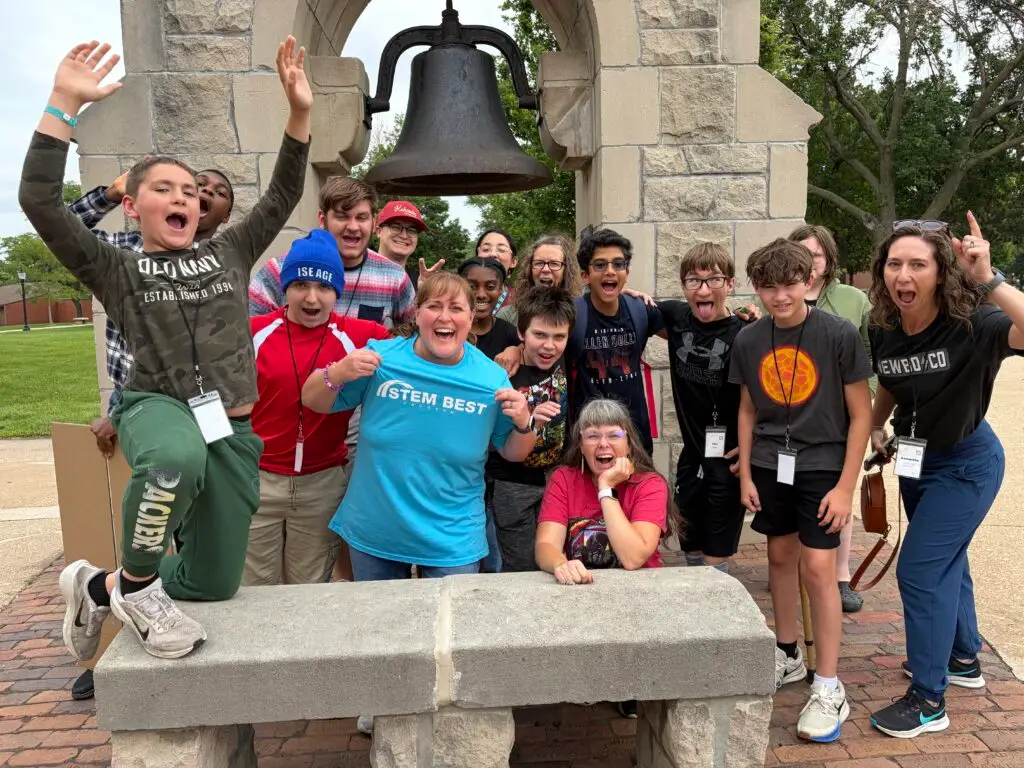
As summer shifted into high gear, a quiet transformation took place inside the classrooms of Coe College and across the streets of Cedar Rapids. From June 22–26, a dynamic group of local middle schoolers stepped away from video games and social media feeds to peek behind the digital curtain. They weren’t just passing the time; they were learning to build the future.
The week marked the launch of an innovative summer camp pilot specifically designed for recent sixth-, seventh-, and eighth-grade students from the Cedar Rapids Community School District (CRCSD). Led by the New Bohemian Innovation Collaborative (NewBoCo), the program’s core mission was straightforward yet profound: to transform Iowa’s youth from casual technology consumers into active tech creators and creative problem solvers.
While students learned the fundamentals of coding, the curriculum went well beyond the computer screen. Organizers structured the camp to emphasize critical thinking, logical reasoning, and debugging — the process of identifying and fixing errors in code. By framing these technical hurdles as puzzles to be solved, the camp instilled an entrepreneurial mindset in participants, teaching them resilience and collaboration. In a society increasingly driven by automation and software, these middle schoolers discovered that tech proficiency is not simply a specialized career path; it is a baseline language for modern advancement.
However, the camp’s impact was not restricted to a traditional lab setting. A key element of the pilot involved its emphasis on real-world application and local career connections. Throughout the week, students stepped out of the classroom to visit prominent Eastern Iowa organizations and businesses, including Matthew 25, MDC Iowa, the Iowa Flood Center, and generate @ UnityPoint Health.
These site visits allowed students to see exactly how data science, technology, and engineering are used daily to solve real community challenges — from monitoring local watershed health to optimizing medical care and fostering neighborhood vitality. Combined with regular tours of the Coe College campus, the experience bridged the divide between abstract classroom lessons and prospective academic and career possibilities right here in their home state.
Bringing this pilot to life required a deeply collaborative ecosystem of educators, students, and community champions. The camp was run in close cooperation with the CRCSD, expanding equitable summer learning opportunities directly within our local community. This vital neighborhood outreach was made possible through a STEM BEST Explore award from the Iowa Governor’s STEM Advisory Council, a grant program dedicated to extending work-based and career-connected learning outside the traditional school year.
Furthermore, global tech giant Google provided foundational funding and support, helping NewBoCo scale its youth initiatives and lower barriers to entry for local families.
What really excelled at this summer camp, however, was the multi-generational collaboration that powered its daily operations. The pilot was planned, promoted, and implemented by an enthusiastic team of NewBoCo summer externs and local educators: Becky Herman, Amy Tursi, and Ryley Robinson. Working alongside them were high school students from Iowa BIG, an initiative that allows area students to earn school credit through authentic community projects.
Among the exceptional student leaders guiding the middle schoolers during the week was Fatima Torres, a recent graduate of Cedar Rapids Jefferson High School and the Iowa BIG program. Torres is a prime example of the exact pipeline NewBoCo aims to build. Having previously participated in NewBoCo’s Girls Who Code club, she chose to champion this new Summer Code Camp as her final landmark Iowa BIG project. Seeing a recent local graduate pass her passion down to the next generation of middle school learners encapsulated the spirit of the program.
Providing early exposure to computer science during the critical middle school years does more than just fill a week of summer vacation; it lays the foundation for Iowa’s future tech-driven economy. When we introduce young people to the tools of creation before they enter high school, we ignite a sense of curiosity that influences their entire educational trajectory.
As the students concluded their pilot week at Coe College, they left with more than just code-related projects. They returned to their neighborhoods armed with fresh confidence, a network of local mentors, and the understanding that they don’t just have to live in a world constructed by technology — they have the power to create it themselves.