
By Cait Brown, NewBoCo Marketing Manager
When Connor Olmstead was an 8th grader at Prairie Point Middle School, STEM wasn’t just a subject on a report card — it was a hands-on playground for big ideas.
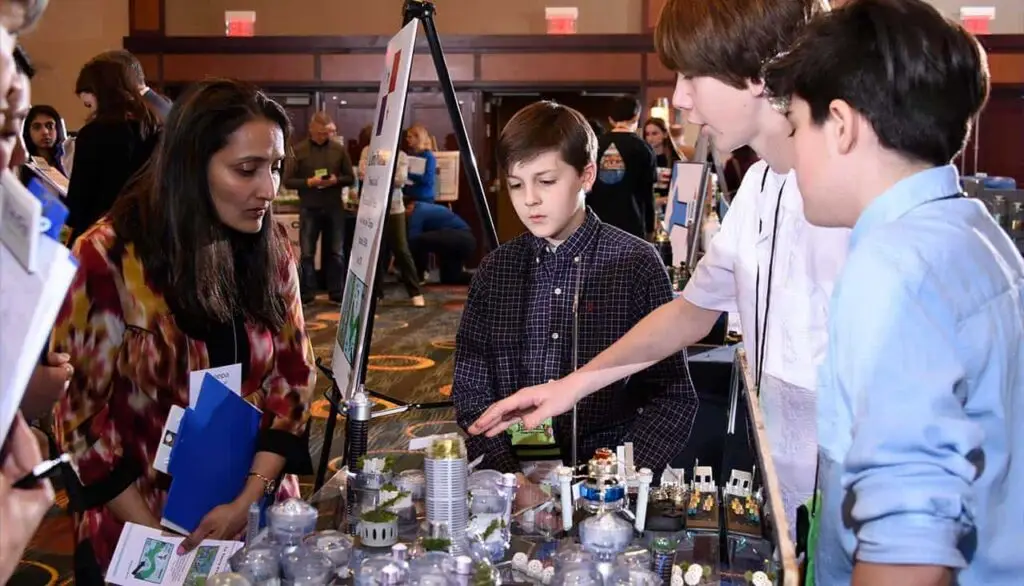
As part of team Ilma, Connor joined Future City Iowa and stepped directly into the shoes of an urban planner and engineer. Alongside his teammates, he took on a challenge that went far beyond textbook equations: imagining, researching, and constructing a scale model of a futuristic city designed to solve complex real-world sustainability issues.
For Connor, that four-month journey transformed abstract classroom concepts into an exciting, collaborative adventure that shaped his academic and career trajectory.
“Participating in Future City was such a great experience — getting to collaborate with a team, problem-solve through trial and error, and present our ideas in front of a panel of experts really changed how I looked at engineering,” Connor shares. “It wasn’t just about building a model; it was about figuring out how to work together to solve actual, real-world problems.”
Hands-On Youth Problem-Solving in Action
The Future City Competition gives middle schoolers a rare opportunity to take full ownership of a high-stakes, creative project. From drafting a 1,500-word city essay to building a scale model entirely from recycled materials, students must navigate real-world constraints from start to finish.
Through this project-based experience, participants gain essential skills that traditional coursework rarely covers, such as:
- Real-World Engineering: Students apply the Engineering Design Process — brainstorming, prototyping, testing, and redesigning until their city infrastructure functions smoothly.
- Practical Teamwork: Working in small groups teaches students to communicate under pressure, divide responsibilities according to each person’s strengths, and navigate disagreements constructively.
- Confidence Under Pressure: Presenting their vision to panel judges — real-world engineers and city planners — helps students hone their public speaking and technical communication skills.
“I think the hardest part of the overall Future City project was when an idea didn’t work out how we had intended,” Connor reflects. “You have to go back to the drawing board together. Learning how to listen to everyone’s ideas, talk through them, and compromise for the greater good made our project so much stronger in the end.”
From Middle School City Models to a Career in Engineering
The impact of early STEM exposure doesn’t stop when the competition ends — it lays the foundation for long-term career success. Today, Connor is pursuing a Mechanical Engineering degree at the University of Iowa while gaining valuable industry experience at Collins Aerospace where he was a Quality Engineer Co-Op for 7 months and is currently a Systems Engineering Intern.
Connor points to early engineering challenges, like Future City, as a key turning point that demystified technical careers and built the practical problem-solving confidence he relies on in industry today.
Why Middle School Engineering Matters
Middle school is a critical developmental window. It’s when young minds begin forming lasting perceptions of what they are good at and where their passions lie. Unfortunately, many traditional K-12 STEM programs can feel abstract or isolated to advanced tracks, leaving many students behind.
Future City Iowa, hosted regionally by NewBoCo, changes that dynamic by making hands-on engineering accessible, engaging, and collaborative for students of all backgrounds.
The national data echoes what educators across Iowa see in their classrooms every year:
| Impact Metric | Percentage of Educators / Students |
|---|---|
| Educators reporting students learn real-world engineering problem-solving | 86% |
| Students feeling more comfortable working in a self-directed manner | 85% |
| Students who can envision themselves pursuing a career in engineering | 68% |
Source: Concord Evaluation Group
Building Iowa’s Next Generation of Innovators
Elevating STEM education in Iowa isn’t just about preparing kids for future jobs; it’s about nurturing curious, resilient thinkers who genuinely believe they can make the world better.
As a new season of Future City kicks off across the state, hundreds of middle school students are once again gathering around tables scattered with cardboard, wires, and big dreams. They learn that failure is part of the design process, teamwork makes ambitious goals possible, and their ideas can shape the future.
Connor’s journey powerfully demonstrates the transformative impact of trusting young people with real-world challenges. The middle schooler carefully measuring scale models today may very well be the engineer designing Iowa’s sustainable communities tomorrow.
Ready to learn more or get involved? Visit NewBoCo’s Future City Iowa page to discover how to register a team, volunteer as a STEM mentor, or support local student innovators.